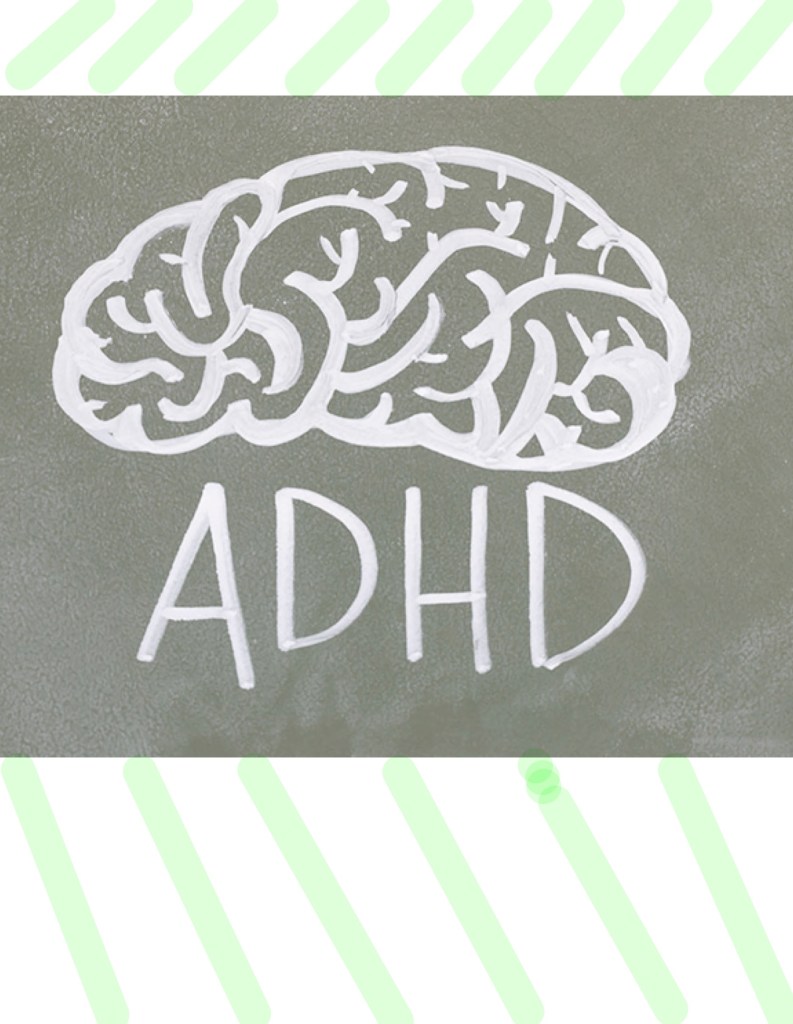
ADHD, known as Attention-Deficit/Hyperactivity Disorder, invites us to explore the fascinating interplay of brain mechanisms that shape our attention and behavior. By unraveling the scientific processes at play, we can gain a clearer understanding of this complex condition.
Once again, let us imagine the brain as a bustling city, with different ideas and thoughts bustling around. The frontostriatal network is a subway system linking different areas of our city, involved in guiding various motor, cognitive, and emotional processes. Studies suggest that dysfunction in this network, guided by irregularities with neurotransmitters (chemical energy sources of our subway system) contributes to the mental disorder of ADHD.
ADHD can have a wide range of effects, including difficulties with attention, impulsivity, hyperactivity, emotional regulation, executive functioning, and social interactions. For example, someone with ADHD may struggle to stay focused during a work meeting, impulsively interrupt others in conversation, experience restlessness and fidgeting, have trouble managing intense emotions, find it challenging to stay organized and meet deadlines, and encounter difficulties in forming and maintaining relationships due to social cues being missed.
But that’s not all. ADHD masking, an often overlooked aspect, adds another layer of complexity. Imagine always wearing a fake face, concealing your true self beneath an outward appearance that doesn’t reflect your inner struggles. People with ADHD may develop coping mechanisms, camouflaging their symptoms to fit societal expectations. It’s like an actor on a stage, performing a role that doesn’t align with their authentic self.
Masking can be a double-edged sword. On one hand, it helps individuals navigate social situations and conform to societal norms. On the other hand, it can be exhausting and detrimental to their well-being. Imagine constantly juggling the act of appearing “normal” while battling internal chaos. The energy required to maintain this façade can drain one’s reserves, leading to increased anxiety, frustration, and a sense of feeling misunderstood.
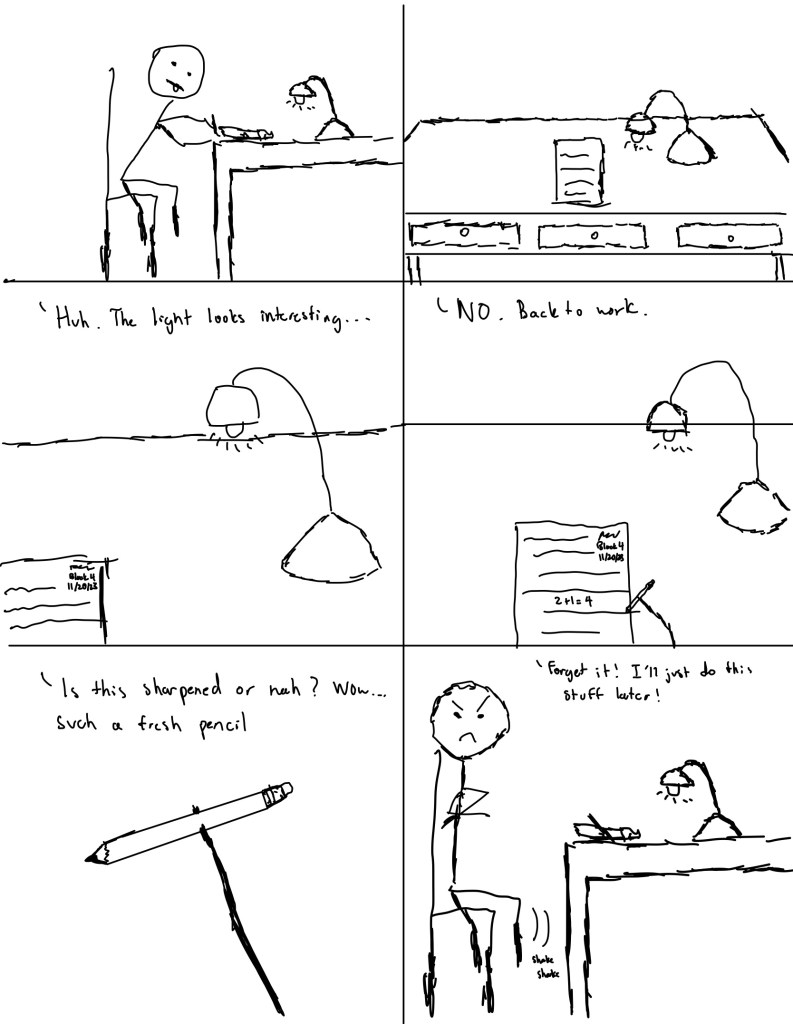
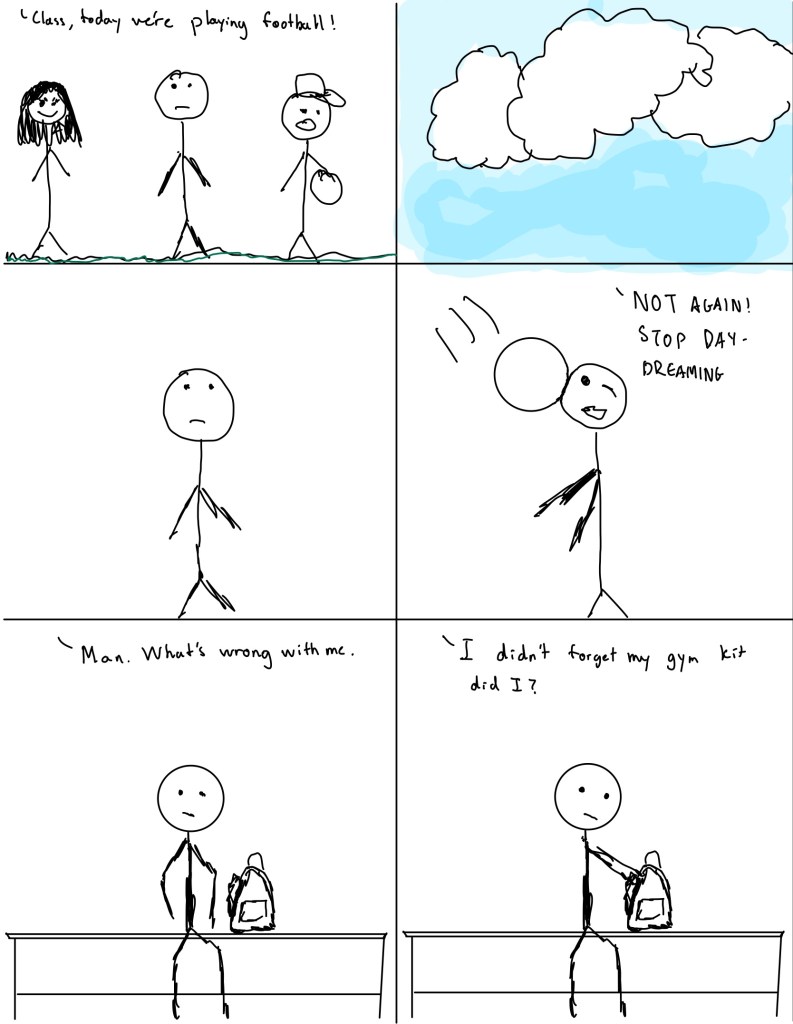
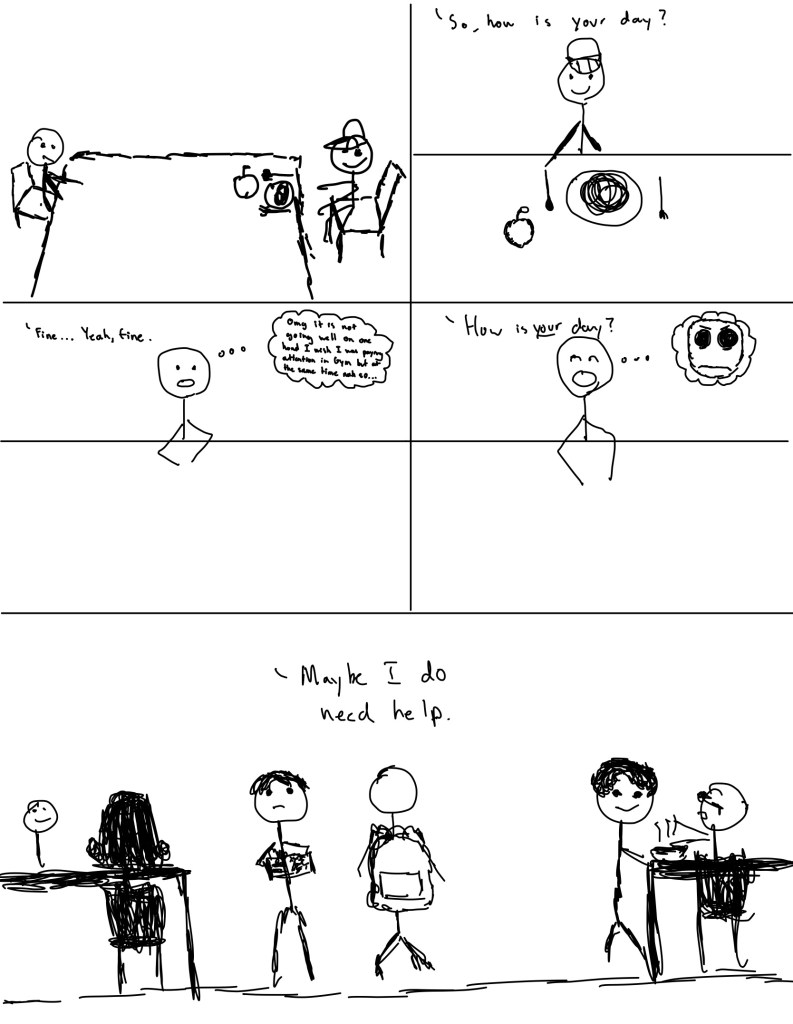
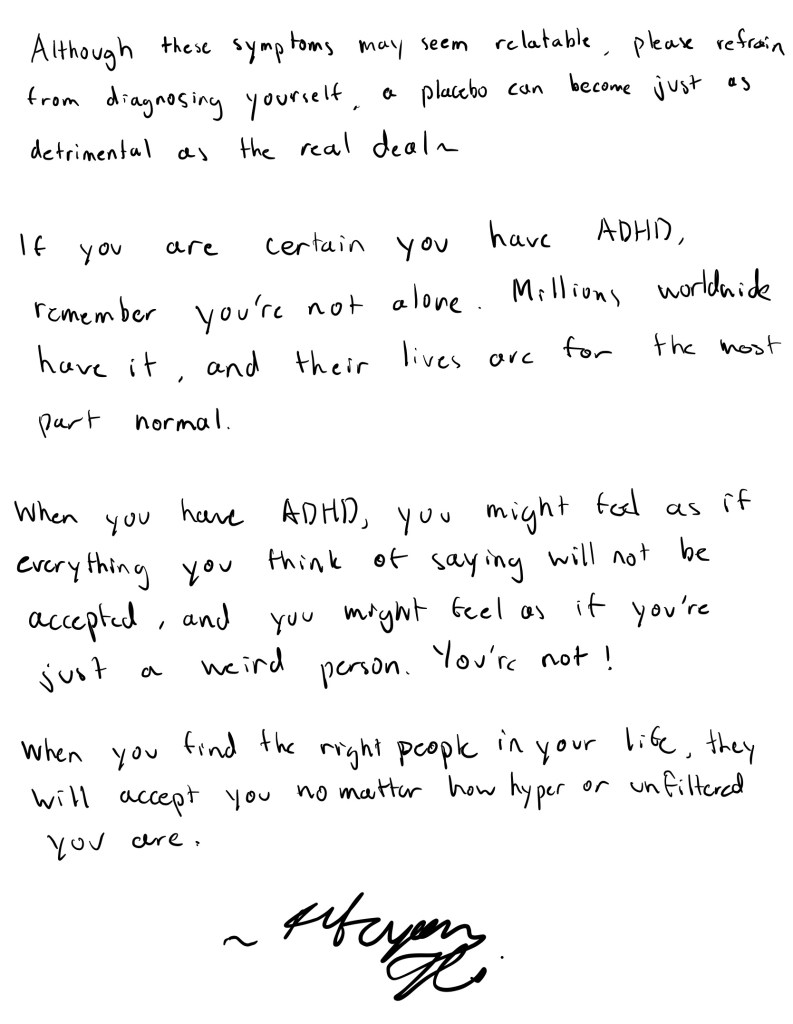
Symptoms of masking, such as constantly checking one’s belongings, self-censorship, and leg bouncing are all symptoms that we explore in the following graphic. Without further ado, please enjoy my interpretation of a student attempting to mask his ADHD.
 Psychology Awareness
Leave a comment