OCD, known as Obsessive-compulsive disorder, is a mental health illness which affects 70 million people worldwide. On the exterior, OCD involves the need to do things over and over again to conform to impulses. It is commonly mistaken for anxiety, as both involve an individual having unwanted thoughts. However, people with OCD feel that they have to act on their unwanted thoughts. In the brain, studies suggest that OCD is caused by an imbalance between two brain systems: the habit learning system and the goal-directed system. There is a brain circuit called the CSTC loop that is involved in habits, and when this circuit doesn’t function properly, it contributes to OCD. The main chemical messenger, or neurotransmitter, involved in this circuit and OCD is called glutamate. If there is too much activity in the CSTC loop, it means there is an excess of glutamate in certain brain pathways, along with problems in the regulation of another neurotransmitter called GABA. Scientists have identified this as a potential underlying cause of OCD. Some studies also suggest there is interplay between nature and nurture in causing OCD.
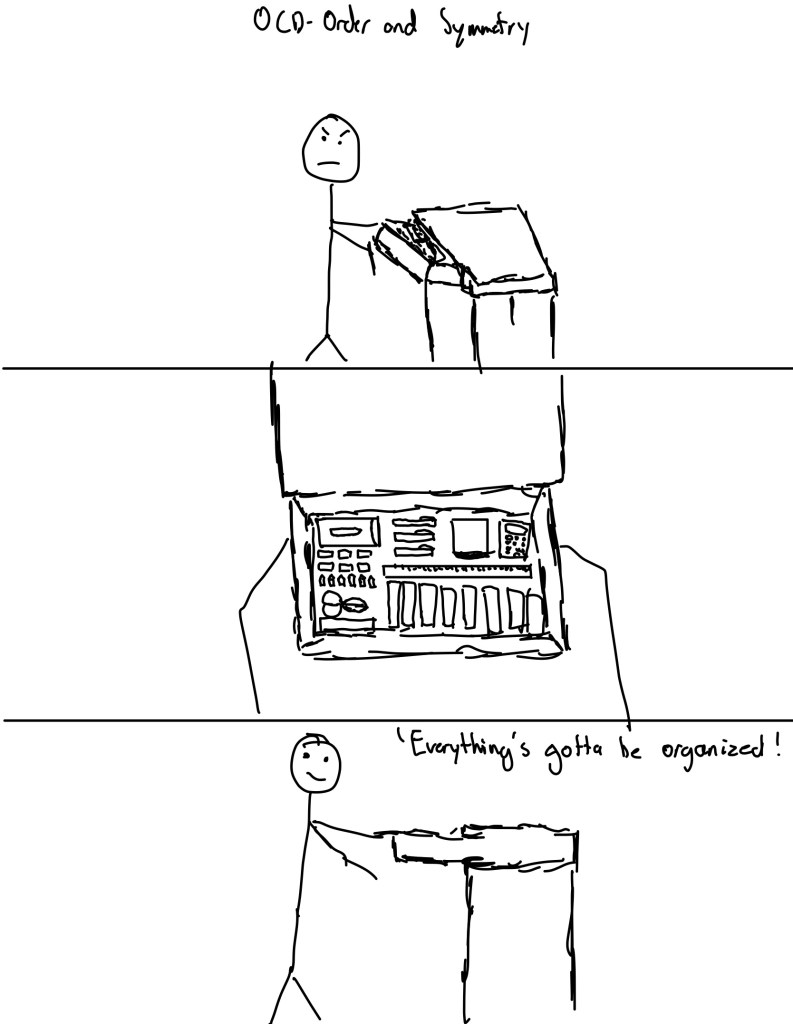
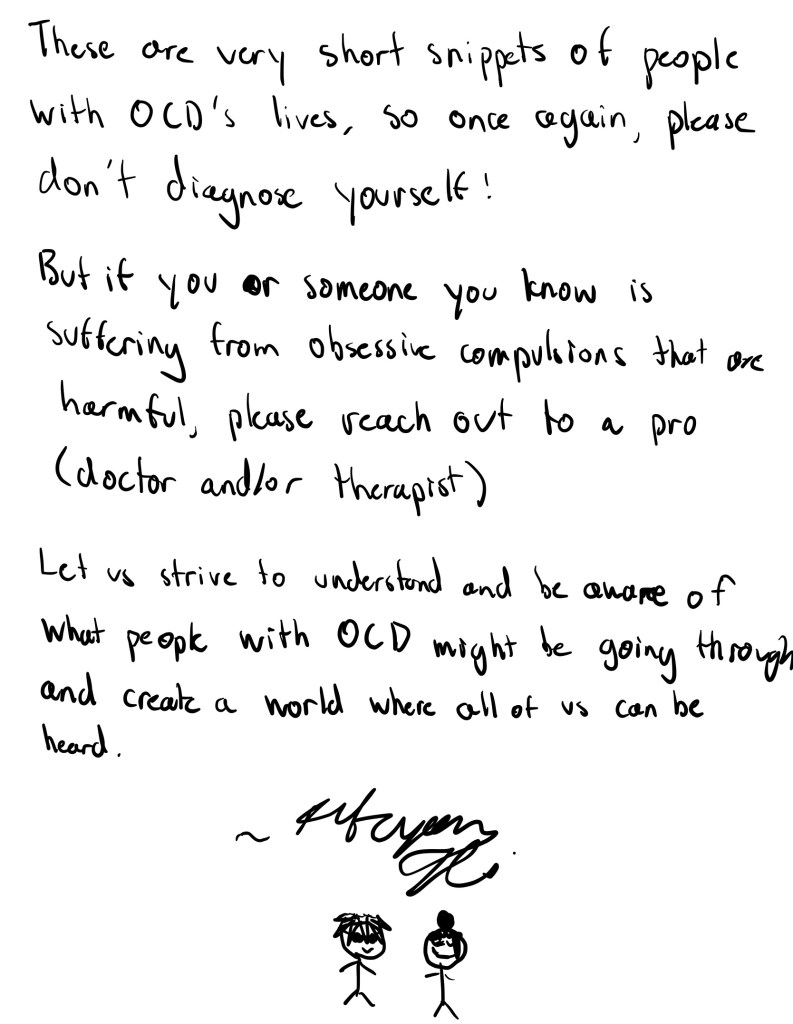
People with OCD have a variety of obsessions, ranging from fear of germs to aggressive thoughts, and have different compulsions, from excessive cleaning to excessive praying. By performing their compulsions, they usually feel a bit of relief from the anxiety caused by their obsessions. However, needless to say, OCD can disrupt the lives of those that suffer from it, ranging in degrees of severity. Without further ado, please enjoy my graphic interpretation of four different people with varying types of OCD.



 Psychology Awareness
Leave a comment