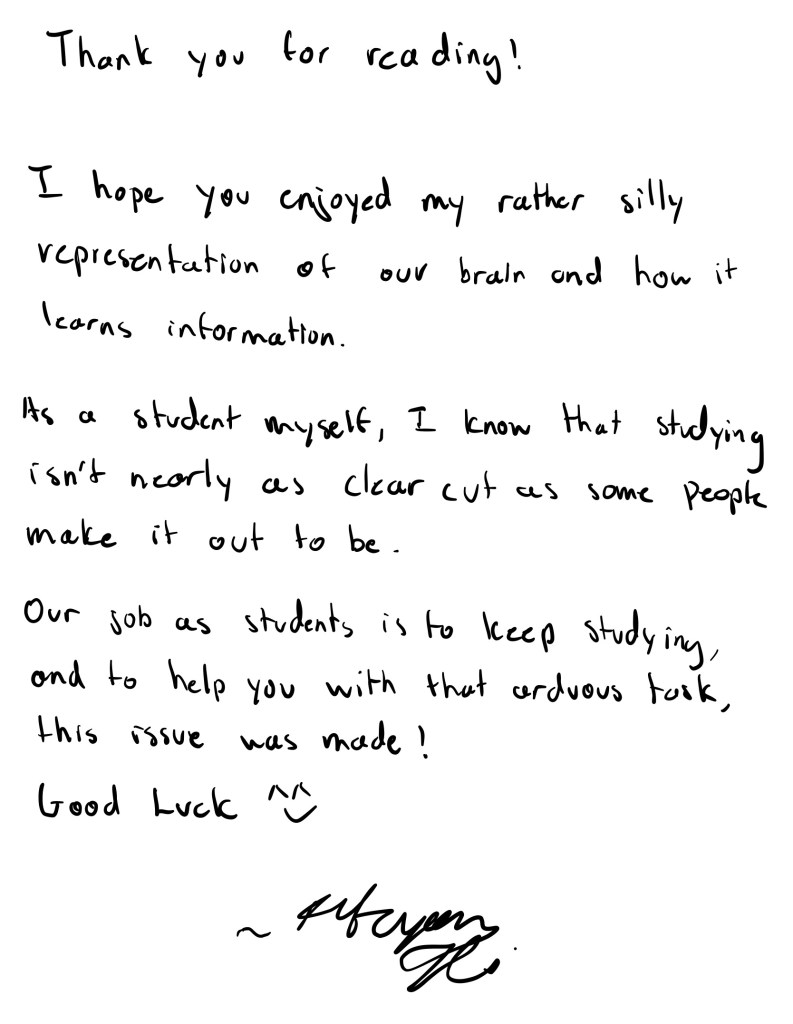
Studying is a challenging task. With phones, the banging construction outside, and maybe even your nagging sibling knocking at your door, we all experience distractions and a loss of motivation to get our work done. At the start of this project, Psychology Awareness, my goal was to spread awareness and knowledge about pertinent issues in Psychology and Neuroscience that are essential or helpful for all human beings to know. When I learned about concepts revolving around learning in my AP Psychology class, I was shocked. How was it that this crucial information, information that could potentially help lift students from all over the world, was taught in an elective class? We should all learn how to learn best to make our learning as effective and efficient as possible. Now, the following graphic novel by no means fits in all psychological concepts related to learning. I urge you to research beyond what I cover for your own sake (it’s also really interesting 😊). However, I have picked out some concepts that were the most eye-opening and helpful for me throughout the past few months of my high school struggles.
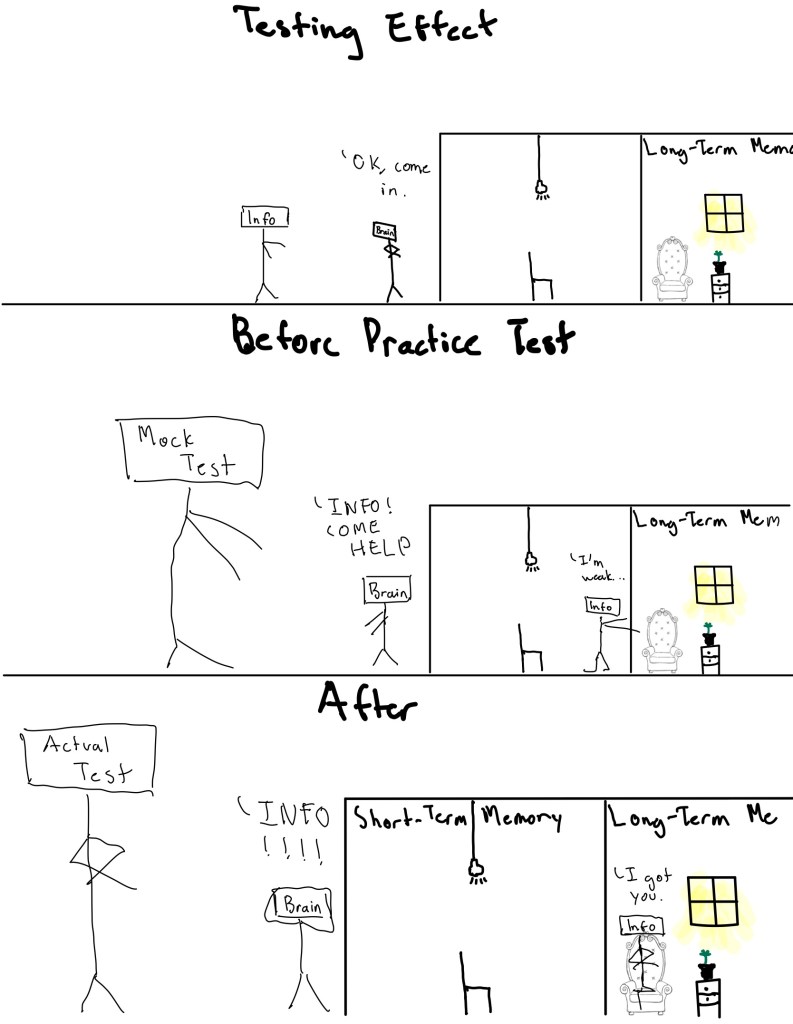
1. Testing Effect: The finding that taking a test on previously studied material leads to better retention than does restudying that material for an equivalent amount of time. (APA)
2. Chunking: The process by which the mind divides large pieces of information into smaller units (chunks) that are easier to retain in short-term memory. (APA)
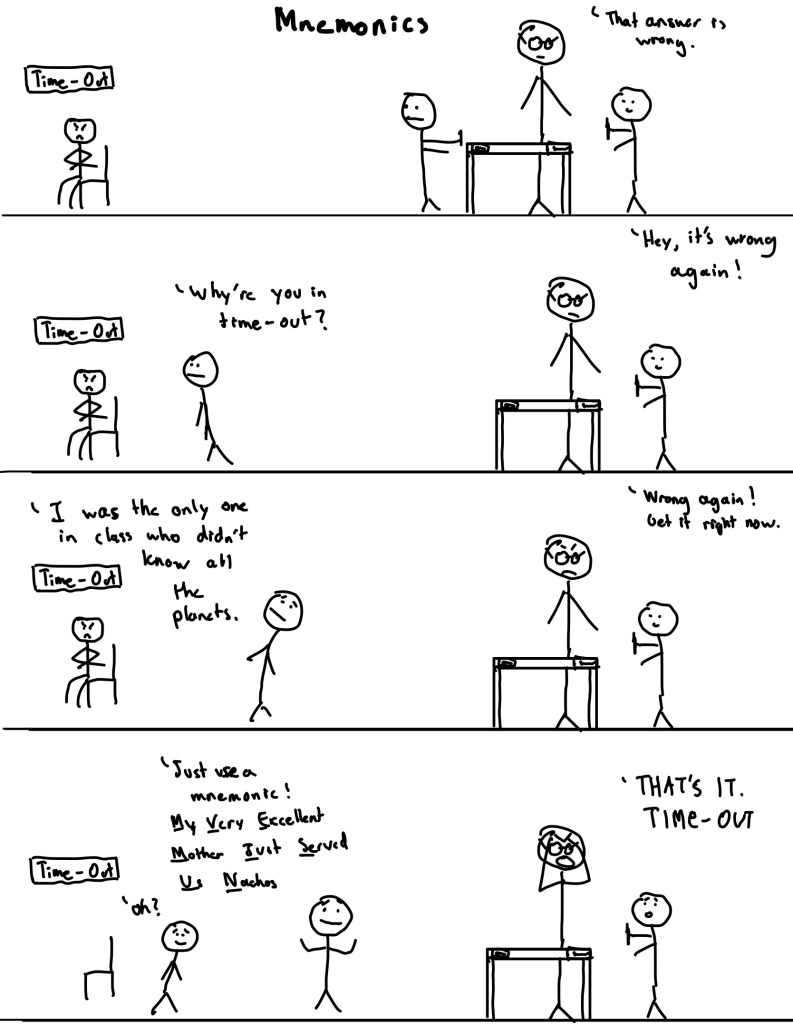
3. Mnemonics: The study and development of systems for improving and assisting the memory. (Oxford Languages)
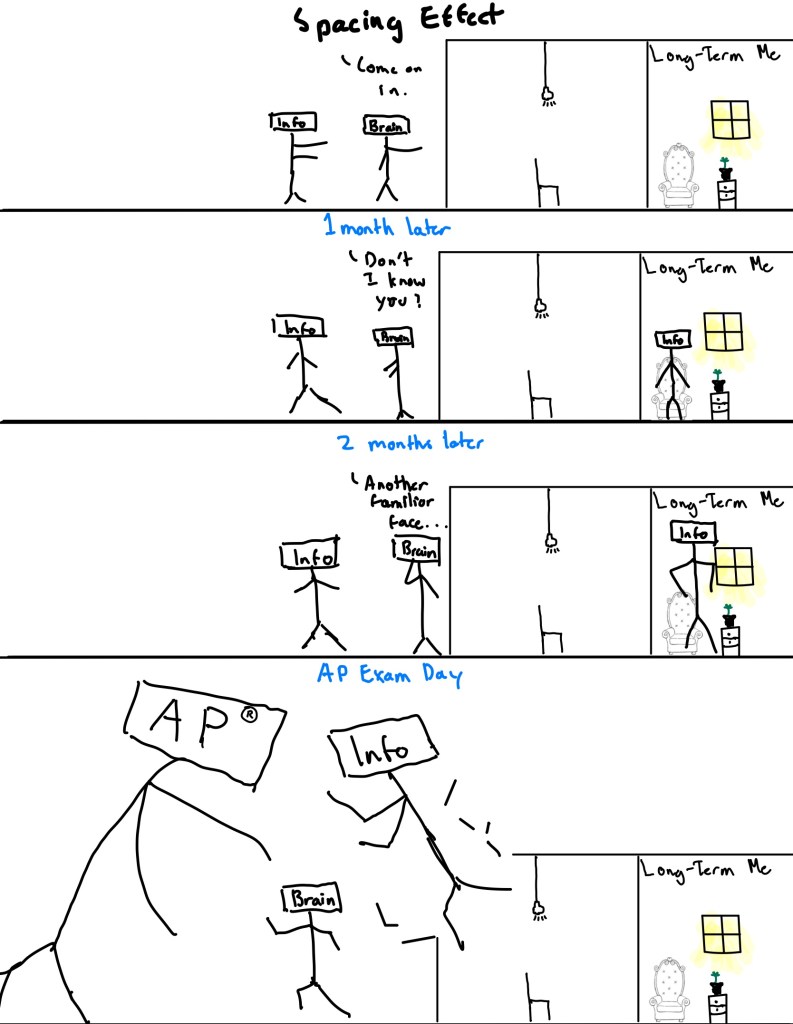
4. Spacing Effect: A cognitive phenomenon in which distributing to-be-learned information across time in short, interrupted study sessions leads to better long-term retention than continuous, massed sessions. (APA)
Without further ado, please enjoy!

 Psychology Awareness
Leave a comment